Monday, 10 October 2022

KM nth restructuring: moral hazard, standard folly or both.

How can anyone justify paying millions to Air Malta employees who opt for early retirement when they were a significant part of the problems that led Air Malta to its present state of financial distress?  It is a typical case of rewarding failure and creation of dangerous moral hazard.   It is a text book example of failed half baked restructurings that Air Malta went through these least 2 decades, in the process absorbing hundred of millions of scarce resources, without actually addressing the underlying problems of inefficiencies and uncompetitive cost structures. 
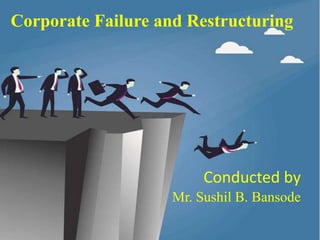

Corporate Failure and Restructuring
Conducted by
Mr. Sushil B. Bansode


Here is what I had written on 28.11. 2010 ( almost 12 years ago):

________________________________________________________________


Can Air Malta Restructuring Fly?

The Malta Independent on Sunday


There is one thing worse than allowing Air Malta to go bankrupt. It is Air Malta going bankrupt after it burns through a palliative loan of €52 million which taxpayers will be advancing it as a liquidity breathing space till the re-structuring plan is executed.

Our record for organising effective and timely restructuring of loss making state-owned commercial enterprises is awful. It took us more than 20 years to restructure our shipyards and only after burning through some one and a quarter billion (nine zeros!!) euro. In the case of the shipyards, the government adopted a death by a thousand cuts strategy to avoid the harsh reality of deep cuts needed to restructure quickly and effectively.

Air Malta cannot be allowed to go the shipyards route. Not only because EU competition rules won’t allow it, but mostly because resources are scarce and we have none to waste. Air Malta has to be a one shot thorough restructuring or not at all.

The government has appointed a steering committee to oversee the restructuring. What does ‘oversee’ mean? Does the committee have an executive role or is it just consultative? If it is purely consultative (as such steering committees normally are, given that governments cannot abdicate their responsibility towards taxpayers who would be funding the restructuring), what are the chances of all represented parties focusing on “where do we go from here” and “how do we get there” rather than getting bogged down in blame sharing of “how and who got us where we are?”

Not that we should not, when the time is right, indulge in a blame apportionment exercise to examine who is responsible for Air Malta’s ailments. Probably the best time for this would be at election time when workers and taxpayers will have both an opportunity to assess overall government performance in managing the economy, rather than just its record at Air Malta, as well as the possibility to take corrective action through their vote. But at present Air Malta is on fire and the priority is to put out the fire and rebuild on sound foundations rather than defensively guard one’s patch purely on the hypothesis that others are responsible for the sad state of affairs.

Don’t get me wrong. It is hard for workers who have been through one austerity round after another to stomach yet more cuts. But Air Malta cannot be saved with its current cost structures if it is to compete effectively with airlines with a lower cost base.

Just last month I was one of the last passengers descending an Air Malta flight which had just landed. A swarm of cleaners made their way up the plane to clean it and turn it around for its next leg. Air Malta cannot compete with such cost structures when competitors have their normal cabin crew clean the plane as part of their regular duties. Air Malta’s front cabin, reserved for the lucrative premium business travellers, is too small to afford such overheads.

Expecting taxpayers to fund a half-baked restructuring is just not on. If, as it was reported, Air Malta made losses even during the peak summer tourist season then the restructuring required is truly deep and raises grave doubt in my mind whether the government, steering committee, management or whoever is involved can deliver true change in the time available.

The steering committee could do worse than take a deep look at one of the most effective corporate restructurings carried out since the financial crisis. General Motors, which had been losing money in the best of times, was forced into bankruptcy by the evaporation of the market for new cars as soon as the financial crisis snapped in the fourth quarter of 2008. Last week it was back in action under a new corporate profitable structure gaining confidence from private investors as its shares were again floated on the US and Canadian exchanges.

The governments of the US and Canada bailed out GM on strict conditionality of true restructuring. Product lines were dropped, factories closed, agency and dealerships terminated, workforce slimmed down to levels permitting efficiency, work practices streamlined, bondholders and pension funds claims converted into equity positions in the new GM.  

This was a painful exercise. Problems that are neglected for a long number of years never have easy solutions. But the alternative would have been even more painful as the collapse of GM would have transmitted problems down the supplier chain sending into bankruptcy a string of component suppliers on whose health other car manufacturing companies also depended. Small wonder that competitor FORD fully supported the government bailout of GM to safeguard the existence of component suppliers on which it also depended.

Blind believers in the free market, like competitor low cost airlines, will argue that they can fill the slack left by Air Malta. In so doing they would be talking their book. The death of a worthy competitor like Air Malta will give them pricing power to demand better terms from their customers or from government subsidies directly or through the NTOM budget. Much as we value low cost airlines’ contribution to our tourism sector, we cannot allow them to have the concentration of commercial power that would come their way through the demise of Air Malta.

This is a typical case where policy change is not sufficiently thought through all its consequences. The restructuring Air Malta that now has to be done under a crisis scenario should have been undertaken in calmer waters when the government changed its policies to permit the operation of low cost airlines. That was the time to ease off all burdens which were politically loaded on Air Malta when it was a quasi-monopoly operator; burdens like free tickets to VIPs, excess labour in overhead departments, inflexible work practices, and involvement in activities that are cheaper to outsource rather than provide internally.

Or is it that our Mediterranean temperament is not suitable for long term planning and we can only deliver under pressure of an impending crisis?

Whatever it is, the dice is set. We now have no choice other than effective and painful restructuring under pressure from an acute crisis. The alternative is even more painful well beyond Air Malta’s confines. 

Burning through millions of euros without change to the final destination, which would sound the death knell for a national champion that made us proud in the 37 years of its existence, is simply unacceptable.

__________________________________________________________________________________________


And yet again this is what I had written on 13.03.2011 

The Malta Independent on Sunday:

__________________________________________________________________________________________

As Air Malta continues to sink further into the red, and the rescue money taxpayers invested continue to be eroded by accumulating losses rather than restructuring investments, we are gradually sliding into a blame game where parties with vested interests attempt pain distribution on the basis of blame apportionment as they perceive it. I hope that while negotiations are going on with unions defending the workers and the government defending its legacy, there will be a voice for the taxpayer. 

We cannot have another shipyard, even if the EU were to permit it. The moment the government took a (good) decision to allow low cost airlines to operate to Malta in the wider interest of our tourist industry, it should have immediately pre-empted a thorough restructuring of Air Malta to permit it to compete in the radically changed environment without being burdened by its heavy legacy costs. 

Now that we have wasted valuable time and precious money watching Air Malta sink under the burden of its legacy costs, it would lead to nowhere if we base Air Malta’s restructuring on a deadly blame game. I honestly doubt if Air Malta is still in a state of repair. Maybe it is better to consider the formation of a new Air Malta which would buy from the old Air Malta its valuable assets, including fleet, slots and intellectual rights, and re-build it from scratch on a competitive cost structure without its legacy burdens. The GM model used by the US government is worth bearing in mind. The rest can wait.
___________________________________________________________________________________________

Pity the taxpayers who had to spend hundred of millions to keep it alive and many more millions now that it is quite unavoidable that it gets buried.


Friday, 12 August 2022

Spend your political capital


It’s been practically 12 months since my last post.  You can say that in my 70’s I lost interest in commenting publicly,  or that I am not inspired at all by what has been going on.  It seems that only the August lull creates enough stimulus to force the volcano of emotions held inside me to erupt.


What has forced me back to my keyboard is that whilst around us so many things are changing:

inflation has returned to its 70’s level, 

we have a hot war going on in Europe three decades after what was thought to be the end of the cold one, 

the environmental degradation has become a true menace to sustainability, 

social media has turned into a dangerous tool to absorb people in dangerous echo chambers threatening the very essence of democracy, 

traffic situation seems to be getting worse rather than better in spite of multi hundred million investments in road infrastructure, 

we have a government that seems bent on not deciding anything so as not to upset anyone, and an Opposition that is so in name only.  The real Opposition are now basically NGO’s like Graffiti and Republika.  

Let me get the situation of the Opposition out of the way as it is simpler to decipher and to chart a way out of its paralysis.   The Opposition is divided between two philosophies which are impossible to reconcile and as long as it stays divided it will continue to be ineffective.  It will become a historical relic rather than an government in waiting.   

The Opposition has to call a spade a spade and having lost three consecutive elections with a landslide in spite of all the corruption and lack of  governance issues that have been tormenting Labour,  it must face reality that the party must split up in 1949 Labour style. Only then can an winning philosophy emerge which will strengthen one part and weaken the other until all the remnants re-unite under one philosophy and common leadership as Labour did leading to its election to majority government in 1955. Otherwise we will continue to see Labour landslide wins notwithstanding the normal fatigue of an overstay in government. 

On the other hand Labour in government must show it can govern not only when faced with a crisis like Covid,  but it must be an effective government in business as usual mode.   Unfortunately that is not happening and one gets the impression that Labour seems to be thinking that leadership means taking no decisions so that it steps on nobody’s toes and thus preserve its wide gap in public opinion over the PN.   

That’s not leadership!!  That is management by hope that issues will sort themselves out and government can thus retains its popularity.   But those are pious hopes.  Issues will not sort themselves out.  Only effective leadership can give a sustainable future to our children. Government must spend some of the huge reserves of political capital it enjoys to bring the country back on the straight and narrow road of sustainability in all its dimensions.

Some pretty urgent decisions are needed to address these issues which cannot just evaporate through inertia and passage of time:

Transport

Building new road infrastructure and rendering public transport free of charge will not solve our traffic problems.   As public transport is rendered free of charge private means of transport must be taxed to dissuade its use.  Otherwise many people will not use public transport even if you pay them.   Traffic congestion does not allow punctuality to the operations of public transport.  

The maxim of no taxes is politically catchy but economically, socially and environmentally destructive.  Taxes are not just imposed to raise revenue.  Often they are the only effective tool to change habits.  And we must be nursed out of our addiction to use private transport by having real public transport alternatives and by paying taxes if we insist on sticking to our bad habits. 


Construction

We seem to have placed our economic growth overly dependent on the construction industry.   I tend to get the impression we have embarked on a brakeless train towards a destination which will bring destruction.   We continue to fiscally incentivize the construction industry which by necessity creates substantial challenges to our quality of life beyond any GDP measurement. 

It is time to consider putting some brakes on the construction train.  Removing fiscal incentives introduced during Covid would be the first step.  Closely followed by incentives for property development in Gozo, the rural character of which is being challenged by over-development.  

Then we need to reconsider whether the system of taxing property vendors on the basis of sales price declared rather than profit on the sale is needed to bring order to rampant VAT evasion in the construction industry.

Finally we need to rechannel the capacity of the industry towards environmentally respectful developments such as greening existing buildings.


Labour

There must be a limit to how many guest workers we can accommodate.  And once we set such limit we must be selective in issuing such work permits to persons that bring new skills and value added and not to low skilled food delivery type of operators forced to work under near slavery conditions.    

Whoever sponsors an applicant must be responsible that the applicant is provided with resources that respect our labour laws.  If this means we have less food deliverymen or shelf stackers in our shops so be it.   We did not have any food deliverymen 10 years ago and probably we have too many shops. 


Tourism

It is not possible to freeze applications for new tourism outfits including additional accommodation.   But in so far as accommodation is concerned we can have policies to ensure that any new accommodation projects ties up with a strategy to up-grade our tourist visitors to higher quality value.

Should we not consider that applications for additional accommodation must buy out permits from lower quality outfits who with the premium thus obtained for ceding their license can re-invent their properties to new uses, including old people’s homes, day residences, or sellback their property to the State where the space can be use to create open spaces in our congested areas. 

And we must not continue to waste money on keeping Air Malta alive.  We have spent too much already, probably more than we spent on the shipyards.   Government should bury Air Malta and join the private sector to create a leaner efficient airline which can sustain itself economically and work on strict commercial lines enjoying no preferences and no disadvantages as its competitors.  If this is not possible then bring on more Ryanairs and Whizzairs. 


I can keep going.  There are so many decisions that need to be taken.  

Soon after summer is over this government would have spent the first 6 months of the legislature practically deciding nothing of substance.  Now it is time to move forward.  Time to spend a part of its vast reserves of political capital to give back oxygen of sustainability to the environment, the people and the economy.

Clearly there will be complaints and dissatisfaction in some quarters by those who expect the government has to solve everyone’s problems by having the Exchequer carrying an open cheque book.   However by the time of next electoral test if government takes wise and bold decisions now,  it can count more winners than losers.

What is not decided and implemented in the first half of the legislature will never get done.


Tuesday, 17 August 2021

A strange situation

 The political situation in Malta is at the moment, to say the least, strange.


We are less than 12 months away from the next general elections.  Some would argue we are probably 8 months away if elections are held next spring or just 4 moths away if they are held this autumn.

At this juncture in the electoral cycle,  an opposition which has roundly lost the last 2 elections,  would be gearing up to offer a real challenge to an incumbent government which normally after 2 terms in office would be suffering from electoral fatigue. 

Post independence elections record show that only twice was there a government confirmed for a third consecutive electoral term.   That was Labour government of 1981-1987 and a PN government of 2008 -2013.   In each case there were extraordinary circumstances which forced the electorate to depart from its traditional 2 term cycle of governments.

In 1981 the popular vote was effectively won by the PN so the electorate kept its rhythm.  It was only the strange provisions of the constitution plus an element of district gerrymandering that produced a Labour government with a majority of parliamentary seats through a minority of the popular vote.  A strange situation which on top of the world recession of the time produced a very tumultuous and unstable political situation which was only resolved by late changes to the constitution which gave a clear win to the PN in 1987.

In 2008 PN won a very narrow election victory which gave it a third consecutive mandate.    But in this case again it was only Alfred Sant, who obstinately chose to remain Labour leader in spite of  his policies on non-EU membership being roundly rejected in 2003, that forced the electorate to deny Labour from its rightful claim to govern.   Any PL leader other than Alfred Sant would have scored a handsome victory for Labour in the 2008 election.   Alfred Sant had lost all credibility to lead the country in its status as an EU member when he had fought the 2003 election on the claim of economic disaster falling on the country if it  chose EU membership. Reality was showing that the country could prosper as an EU member.

Yet here we are in 2021, a few months to the next elections and all polls and surveys continue to indicate that Labour still enjoys a commanding gap in ratings over the PN and if general elections are held now Labour would again win by a margin as big as 2013 and 2017. 

I scratch my head trying to understand why this is happening especially at a time when Labour has, since the Yorgen Fenench saga exploded in November 2019, been on the defense shouldering blame for irresponsible governance.  This has projected  a strong perception of corruption at its  highest ranks and it has now been formally declared responsible for nurturing an environment of  impunity which was conducive to the horrible murder of a prominent journalist and government critic. 

I can think of four reasons which, singly or collectively,  contribute to this unusual state of affairs.

1. Labour has cleaned its stables whilst in government in less than 1 year whereas the PN has not cleared its stables after 9 years in opposition

2.  For all Labour's faults as regards poor governance, Labour delivered economic growth which was widely shared and people care more about their pockets rather than  about strong governance.

3. Labour has handled the Covid crisis in an exemplary manner and the importance of a strong economy was brought in evidence by having the necessary fiscal space to protect the economy from a sharp crash in spite of over-exposure to tourism.

4.  The PN show no serious plan to become an alternate government and their eagerness to bismirch the whole country in international fora exposes their narrow mindedness.   People want positive approach to problem solving not just murmurs and complaints. 

Going by the very bad experience of governments when elected to serve a third consecutive term I would have thought that the PN should by now be flying much higher.     It  seems the country may yet have another opportunity to discover whether a third term government can work effectively or if it will again be a bad experience as in 1981 and 2008.    Probably this is Labour's major challenge as it goes to seek a new mandate from an electorate not used to successful third term governments. 


Thursday, 29 July 2021

Over my dead body


I will not enter into detailed analysis of the Public Enquiry about the State's failure in fulfilling its duty that could have prevented the assassination of journalist Daphne Caruana Galizia (DCG). 

I would just say that I am in general agreement with its conclusions and the need to adopt the recommendations to ensure proper governance at all levels of government.  In particular I agree that ‘business friendly ‘ does not and should not mean undue familiarity between the powers of politics and business.   It should mean the adoption of business friendly policies which get executed with all governance precautions by the permanent executive of the civil service and public corporations.

However I take strong objection to a recommendation on page 434 ( out of a total of 438 page report) where it is stated:

Ä ie suġġerit ukoll illi ma kienx hemm lok ta’ kawżi ta’ libelli kontra Ä¡urnalisti jkomplu wara l-mewt tagħhom.

To this I say over my dead body.   I have been libeled by DCG and she caused pain and harm to my reputation and to my career.  My libel case is proceeding at a glacial space.  But I live in the hope that in the end truth will prevail,  so that the allegations DCG made about corruption and money laundering I was accused of having committed in 1997/1998 are proven libelous and untrue. I want no pecuniary compensation.  I seek merely official removal of the slur on my character and personality which DCG, without any evidence, threw upon me just 3 weeks before I was supposed to be appointed Governor of the Central Bank.

Let’s ensure that as we protect freedom of the press, we don’t create injustice to victims when such freedom is abused.


Thursday, 15 July 2021

Grey DNA

It's been some 15 months since I last posted anything on my blog, which has largely assumed the role of a library rather than a live blog.   You may correctly say that I lost the verve to express any opinion  as a combined result of the consequences of the pandemic as well as political developments, which to say the least,  have turned me largely uninterested in what's going on in the local political scene. 


The recent grey-listing by the FATF sort of tickled me to revive my interest and express an opinion, and finally I have been overcome. But I will keep it short and cryptic.

What has been grey listed is not the government, the financial sector or the country.  What has been grey-listed is our deep-rooted DNA;  our strong inclination to approach corporate governance and self-discipline in general in a tick box manner.  We do what needs to be done on the surface by building institutions and passing laws, but in general it is all skin deep.   There is generally no inner conviction to render these institutions and laws truly effective where it matters, in their impact on what actually is going on the ground.

It must be more than 5 years since  I attended a seminar where the then head of the FIAU warned that the next Moneyval inspection will not be a tick box exercise, but we will be judged by how many cases have been investigated, charged and brought to courts' judgment.  The warning went unheeded for several years before we were shocked by the first thumbs down by Moneyval. 

Then we truly started throwing resources into building institutions to render them duly effective but this can only be done over a period of several years; resources have to be recruited and trained, and systems have to be built to detect suspicions and convert them into cases that can standup in a court of law that has to deliver judgments in matter of months not years.

So when the matter went in front of the FATF it was always going to be a 50:50affair.   Were we to be judged by the considerable effort done during the previous 2 years to build institutions and structures or by the fact that such efforts are yet some distance from being sufficiently effective to deliver the expected results?  While Moneyval seemed willing to give us the benefit of the doubt by opting for the first fifty, FATF, where politics get in the mix more than at Moneyval, thought we deserved the second fifty to ensure we keep up with our efforts until they can see results.  The length of time we spend in the grey depends on how long we can show such results not in one or few particular cases, but in a normal business as usual rhythm.

I personally was quite sure  that FATF will hold us more to account than Moneyval.  And I can hardly blame them for harbouring doubts about our true intentions to carry on with the job till we really have a functioning AML system.  I base my views on two simple examples.

First: it took us years to introduce cash limits for commercial transactions and when we did it was set at a very high threshold of Euro 10,000.   Do you ever see anyone who has no tax evasion/money laundering  in mind paying for anything over say Euro 3,000 in cash?   Many countries have limits as low as Euro 1,000 but Euro 3,000 is somewhat the acceptable limit.   So why we kept Euro10,000 if not in clear demonstration of our willingness to tolerate a brisk dose of tax evasion/money laundering?

Second: We maintain the system that whoever pays 15% of investment income/bank interest will not be subject to automatic disclosure to tax authorities.   But if tax is being paid what's the scope of non-disclosure if not to keep out of tax enforcement sight the capital which is generating such income?  Why have we rendered the offshore onshore?

Such and other instances shows that our DNA is still largely oriented to skin deep changes but we are not yet sold on the need to get serious and build  a truly functional tax efficient structure and AML system.


Wednesday, 22 April 2020

The shape of recovery

The Sunday Times of Malta
12 April 2020
After every economic downturn there comes a recovery.   In economic jargon such recoveries are defined by their shape.
A (V) shaped recovery happens when the downturn is overcome and the economy is restored to its pre-recession level quickly. In such case the economic damage is light and quickly forgotten as the economy resumes its long term growth trend. This is a typical cyclical shallow recession that happens in the normal course of events.
A (U) shaped recovery happens when the economy spends quite some time at the bottom of the downturn and the road to recovery is long and painful. In such case the economic damage is quite substantial and the economy may take very long both to reach its pre-recession level and especially to recover its long term growth rate.  This is quite what happened with the recession caused by the financial crisis shock of 2008 and the euro crisis of 2012.
An (L) shaped recovery is the worst type of recession where there is such a sharp and deep drop of economic activity, often caused by unexpected shocks causing physical destruction,  such as wars and natural disasters, that recovery is very long, painful and at best uncertain.
What shape will be the recession of 2020 caused by the sudden shock of the COVID-19 pandemic?
You have to be a great optimist to believe that the recovery can be (V) shaped.  The shock is so deep and wide, sparing no major economy, that in a world that is economically interdependent, the whole world will struggle to regain confidence to restart the economic engine.
It is more likely that the recovery will be somewhere between the (U) and the (L) shapes. Much depends on how long our health priorities will constrain us to keep our economic units on life support if not totally frozen. The longer this takes the more difficult will be the recovery.  This must not be interpreted as any appeal to subordinate health priorities to economic objectives. It is presented as factual; the longer it takes to put this epidemic behind us, the harder will be the road to recovery. If anything it is an appeal to heed all advices given by health authorities, which is the only way we can put this health crisis behind us as quickly as possible.
Even though our economy has entered this shock from a position of strength (low unemployment, strong growth, low and reducing public debt to GDP ratio, and several years of fiscal surplus) resources are not infinite.  And given the prospect of a long hard slog to recovery, our resources need to be applied judiciously with the long term in perspective. 

Even though our economy has entered this shock from a position of strength resources are not infinite
When health authorities signal their consent to start relaxing restrictions it is obvious this will not be a big bang, Trump notwithstanding. It will be a gradual and stepped up approach. Initially small shops may be allowed to open up without relaxation of crowd limitations.  Then larger shops will be brought back to life and if all goes well than small catering and entertainment outfits will be switched on. 
The last to join the fray will be outfits which by their nature attract crowds such as churches, sport and cultural events, cinemas, large entertainment outlets and so on. And up to this point it would still be largely a domestic affair. Before opening up to international travel the authorities would need to be confident that inflows from other countries would be safe enough to restart hotels and other tourist accommodation outlets. Clearly it would be a slow gradual process involving months not weeks.
Government assistance has been timely and effective. Highly-impacted sectors were given payroll subsidies on condition they keep their workers in employment. The cash flow of business units has been alleviated by deferrals of tax payments due in the months of March and April.
The government has offered banks guarantees to release bank finance to the tune of €770 million at very low interest rates, to give working capital support to businesses, both small and large, so that they can spread the burden of this crisis over four years and possibly longer.
Obviously the businesses that were not classified as highly-impacted feel short changed.  They claim discrimination especially as they start being impacted by the ripple effects if the crisis, less direct but still painful.
Their claims for direct subsidies have merits. But equally valid is the government strategy not to fire all bullets when it is clear that the recovery will be long drawn out and painful. If the government can be confident that the recovery can be more (U) shaped than (L) shaped it can fire more bullet subsidies to cushion the secondary ripple effects.
However, with what is going on in the EU and particularly the euro area, can one really have confidence that we can avoid an (L) shaped recession?
The euro area entered this recession in pretty bad shape. The ECB was keeping it artificially together by promoting a negative interest policy to give time to political leaders to work out a more stable structure for the euro monetary system before it would be wiped away by the next deep recession.
The time was largely wasted and the next deep recession arrived unheralded much earlier than wished for.  While it is true that it takes a crisis to forge solutions in the EU, the divide between those insisting on coronabonds and those insisting that each country should remain responsible to keep their fiscal accounts in order, is too wide to bridge over in a sustainable way.
If on the top of the COVID-19 recession we risk great instability caused by the threat to the very existence of the euro, then the base of the (L) shaped recession could be quite long, and we must take that into consideration in our recovery plans.

Monday, 30 March 2020

How much is enough?

Times of Malta
Opinion
30th March 2020

This question is often put to me by concerned and interested observers wondering whether the three aid programmes so far announced by the government would be enough in their cumulative impact to restore the country’s economy to its normal state of sanity and growth, as experienced until the COVID-19 pandemic turned everything  upside down.
The simple answer is that we don’t know. Nobody knows.  There are three basic unknowns which render a proper assessment of the size of the problem impossible.
So equally impossible is any certainty regarding the type and dosage of the required medicine. 
What’s for sure is that we need to have a very deep war chest and have to be ready and flexible to dose the solution commensurately, as the size of the problem continues to emerge.
The three basic unknowns are:
1. How much resources do we need to channel to the health sector to ensure it stays ahead of the curve as the pandemic reaches its peak and then hopefully starts to recede gradually?
2. For how long do we need to keep the productive economy largely frozen as many workers, consumers and clients are forced by circumstances to live within their household walls?
3. Once we get over this scare and we start the process to normality, what would be the gradient of the recovery process?
The first unknown will have a substantial impact on government finances but contribute to economic growth as government has to deliver more services. 
The other two unknowns have a huge negative impact on both government finances as well as the general economy as economic activity freezes and economic units lose huge chunks of their operational revenues.
It is difficult to escape the conclusion that 2020 will register both a contraction in the economy, i.e. register negative growth, as well as substantial shift from surplus to deficit in government finances. 

Government programmes so far have given first aid support
What we cannot be sure of at this stage is the intensity of such shifts. Some models I have seen show that if the crisis stretches over four months i.e. March until June, the eurozone economy could shrink by 10 per cent in 2020.
I think this is quite plausible for our circumstances given our exposure to highly impacted sectors like tourism, entertainment, financial services, and construction, and assuming that it could take six months to restore consumer confidence to its normal level.
Should we worry? Of course we should; there are too many uncertainties not to worry. Should we panic? Absolutely not.
We must do whatever it takes to keep our workforce healthy and to help our economic operators to stay alive until we put this crisis behind us. The size of the budget deficit needed to achieve these objectives is quite of secondary importance and we have ample debt capacity to borrow whatever needs to be borrowed to see us through.
It is evident that government is the only entity that can do what needs to be done to get us out of this crisis with the least damage possible and in a situation where our economic operators stay healthy enough to return to full activity and efficiency.
Government programmes so far have given first aid support. The first package provided liquidity through deferred tax payments. The second and third versions extend payroll support to the most impacted sectors.  They also provided for highly needed contingent obligations by the state to enable banks to extend liquidity support to borrowers without risking their own (banks) state of health.
Nobody knows if this is enough. My feeling is that the first package was absolutely needed and easy to implement.  It is also indiscriminate among business sectors. The second and third packages have a hint of instant cooking and discriminate among sectors. It was put together with urgency with understandable focus on protecting employment in the most impacted sectors.

At some stage one has to consider whether payroll support is sufficient or indeed the most effective way to go about it.
If difficulties prolong, the call for more will become irresistible. At some stage one has to consider whether payroll support is sufficient or indeed the most effective way to go about it. While most economic outfits should be able to absorb a bad month, few are in a position to withstand a series of bad months where most or all of their operating revenues simply evaporate.
For those outfits that do not qualify for the payroll support schemes announced, or wish to opt of them and are manifestly being impacted by the crisis through lower or no operating revenues, the government may have to consider the introduction of revenue support schemes.
Basically this would involve the outfit demanding support by explaining how their revenues are being hit and government considering grants up to 50 per cent of the revenues declared in their VAT returns for the comparative period of previous year 2019.
The remaining 50 per cent would reflect the direct expenses that would be saved and the profit margins that economic operators have to forego.  This would always be subject to qualifying enterprises committing to keep on their entire workforce.
This scheme would protect the job safety of those not enjoying payroll subsidies of current schemes and enable economic operators to stay broadly current with their other operating expenditure like rents, insurance, energy bills and other overheads.
Failure on these payments would otherwise deepen and prolong the recession.
We need to be ready for the worst and believe that whatever the financial impact experienced, we can recover all setbacks over the medium term as we bounce back into activity to reclaim and extend our full economic potential.

Saturday, 28 March 2020

Going through this together

Times of Malta
Opinion 21 03 2020
 These are extraordinarily abnormal times. An invisible virus has come out of nowhere to shake the major economies of the world. No one was really prepared for this. If the crisis prolongs, the world will be dragged into a recession. The type of recession will depend on developments which are mere guesstimates at this stage.
If the spread is controlled within the next few weeks and confidence to resume normal times emerges in the the second half of spring, then we can expect a good recovery in the second half of the year so that the year will finish with lower growth but still some growth. This will be a V-shaped recession.
If on the other hand the recovery in consumer confidence takes longer to re-emerge, this recession will be as bad a recession as that of the early 1908s.
It will be a U-shaped if not L-shaped recession.
In Malta, thankfully, we are facing this challenge from a position of economic strength. The performance these last seven years has been impressive and the macro economic position is endowed with fiscal buffers which can be released to cushion the negative impact of the current crisis. Debt to GDP is now just over 40 per cent, down from 68 per cent in 2012.
The government budget has been in surplus for four successive years. Reserves have been stashed away in the National Development and Social Fund (NDSF) to be used to finance investments outside the main budgetary stream.
The government has already announced measures to aid businesses to manage their cash flows as their revenue streams dry up. This applies particularly to economic operators in tourism, hospitality, personal services and distributors/retailers of non-essential goods.
It may apply also to other sectors like construction and manufacturing if workers cannot get to work or if orders get cancelled in the face of emerging uncertainty.
Postponement of tax payments due in March and April offer a boost to business cash flows which help them to stay alive until we put this crisis behind us.
However it does little or nothing to cushion the blow to the operating performance of businesses in the eye of the storm.

The government could consider sending a payment to every household to maintain consumer confidence
Hotels, restaurants, retailers of non-essential goods, and small businesses offering personal services could be severely hit. On the other hand, wholesalers and retailers of food, medicine and other essential goods and services are having a Christmas in spring.
The government needs to extend support to those being hit in a socially just manner. It cannot condone the principle that profits are to be privatised but losses are to be socialised. 
Whatever it does must be focused on those who need assistance to stay alive so they can be around to facilitate the recovery when the crisis abates. The level of government support should be timed to facilitate coming challenges not to address past stress. A bad month after several years of growth should not be fatal to serious businesses.
Assistance needs to be targeted to help businesses and protect workers. Those enterprises that need to adopt short work weeks should benefit from a government subsidy to keep intact the basic take home pay of affected workers.
Employees who are forced into mandatory quarantine should have a good part of their salary financed by the state.
The government can offer indemnity to banks against a good part of losses they may incur through offering borrowers a one year capital repayment moratorium. This applies to business loans as much as to house loans, though interest has to continue being repaid as due.
The government could also consider sending a payment to every household to maintain consumer confidence in the face of rising prices caused by panic buying. No cheques... simple direct credits to avoid sending people to queue outside our banks who are already stressed by staff shortages. Ideally this measure should be timed to impact as soon as quarantine restrictions are lifted to give a boost to consumption which is currently being constrained.
These measures and the huge expense government is incurring to try to keep us healthy, will probably turn a projected one per cent budget surplus to a few percentage points of deficit.
So be it! The priority now is not the budgetary end result.
The priority is saving the economy and protecting our operators to ensure that they stay energised to regain traction when this crisis is behind us in the second half of 2020.

Wednesday, 31 January 2018

The Euro: A Cure or a Curse for the EU?


Image result for euro


I have pleasure in launching the Essay I have been working upon since my retirement form Deputy Governor of the Central Bank of Malta last June 2017.

I believe this Essay provides innovative and possibly controversial thinking of how to achieve a instant, equitable and durable solution for the instability within the  European Monetary Union (EMU) and is possibly the only way  to ensure longevity for the EURO.

I wish to thank all those who helped me in reviewing my drafts and suggesting improvements even if many remained sceptical on the practicality of what is being suggested.

I sincerely hope this adds a different viewpoint on the the problems caused by strong disequilibria within the EMU and that at least it can be considered and discussed.

I would greatly value any feedback.

Click on the link below:


PDF download: The Euro: A Cure or a Curse for the EU